Senior engineering with automated assistance
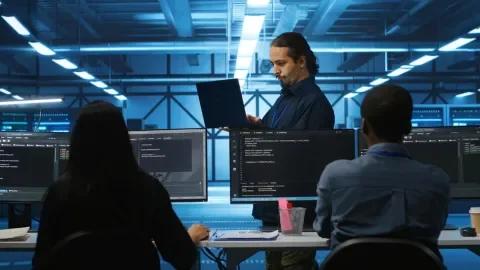
Enterprise development doesn't accelerate by hiring more junior developers. It accelerates with senior engineers who master Drupal and tools that automate repetitive tasks. Our team works with assistants integrated into the development cycle: real-time code review, test generation, early vulnerability detection, living documentation. The architecture decision remains human. Speed and consistency are the result.
Authority in the Drupal and Acquia ecosystem
Verifiable credentials from the global Acquia program and the Drupal community.


Why build with esinergia?
16 years delivering enterprise Drupal projects in LATAM. The difference between code that works today and code that sustains operations in five years.
Senior engineers with certification
Team with over 25 Drupal and Acquia certifications distributed across the team. Every project has a senior Dev Principal who operates as the client's direct technical contact.
Speed with measurable quality
Assistants integrated into the cycle accelerate repetitive tasks: boilerplate, test generation, documentation. Architecture judgment is human. The result is measured in coverage and delivery time.
Enterprise security standard
Early vulnerability detection during development. Alignment with OWASP, Drupal Security Team, and contractual obligations with clients in regulated sectors.
Depth in critical ecosystems
Documented experience in universities, hospitals, government, and media. Integrations with SAP, Salesforce, Banner, Moodle, and regional platforms are not learned on this project.
Three core engineering capabilities
The technical foundation that sustains high-traffic, high-complexity platforms built for continuous evolution.
Frequently asked questions about Drupal engineering
What CIOs, CTOs, and technical leaders ask us when evaluating a development partner.
We work with closed enterprise environments, private models or enterprise instances from recognized providers, that guarantee the client's code and data are not used to train public models. Internal usage policies are documented and form part of contractual obligations with clients in regulated sectors. Human review of all generated code is standard protocol, not the exception.
It depends on the project type. In pure engineering projects, migrations, custom modules, and integrations, automated assistance reduces between 20% and 40% of the time spent on repetitive tasks such as boilerplate writing, test generation, and documentation. Architecture decision time, technical review, and client validation don't change, and that's where the real value is. We're talking about faster delivery, not cheap projects.
The open module wins when it resolves the use case with standard configuration and has active maintenance. Custom development wins when the logic is business-specific, requires integration with internal systems, or the open module would need significant modifications. Before each project we evaluate which existing modules cover part of the scope. Not writing code that already exists is part of engineering work.
Every project has living documentation: architecture, technical decisions, integration configuration, operations runbooks. Documentation is not a separate deliverable at the end; it's built during development. When a project rotates to another team, internal or from esinergia, the transition is measured in days, not months. Operational continuity is part of the commitment, not an additional service.
Do you have a Drupal engineering project in mind?
We start by understanding the scope, critical integrations, and real complexity of your project. No commitment.